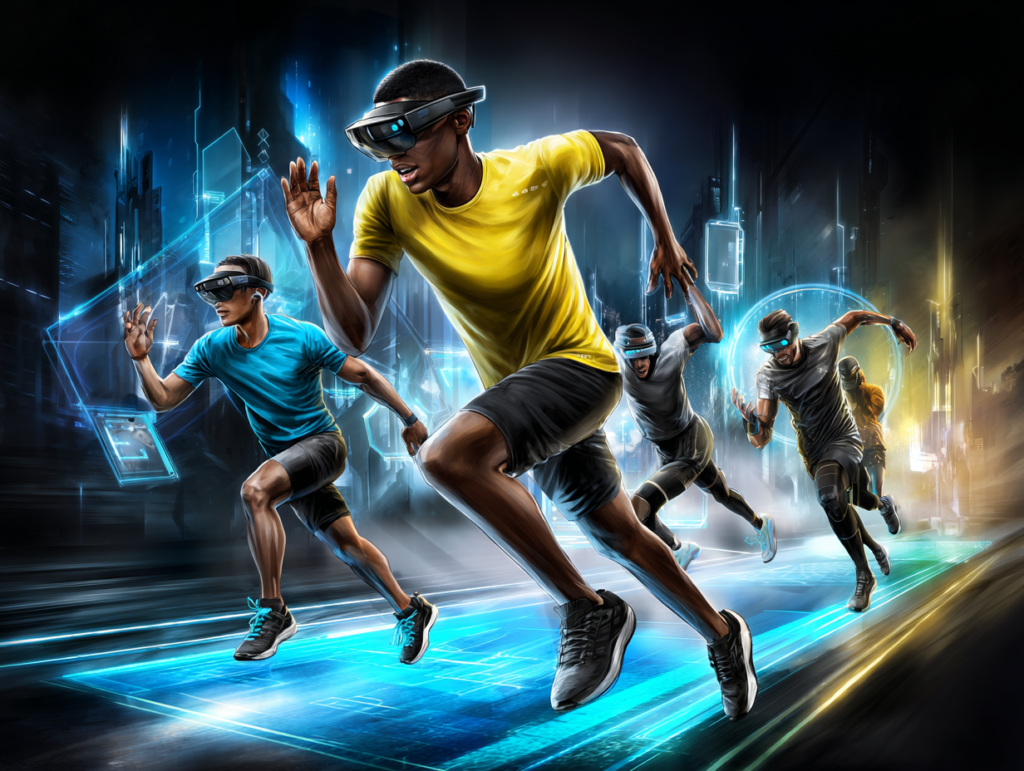
The smartphone era is slowly winding down through a gradual shift toward more immersive technology. Our entire two-dimensional digital environment we’ve grown used to, the smartphone, and our pc’s and laptops are being put into question.
A quiet battle is already underway among the world’s largest tech companies to define what -or more importantly who- replaces them. Not simply in form, but in function, philosophy, and influence.
Our next interface will reshape how we see, move through, and interact in our digital space and even with the world around us.

The Interface Layer Is Moving to Your Eyes
For over a decade, the screen in our hand has been the primary lens to the digital world. That lens has it’s limitations. It pulls your attention downward. It isolates rather than integrates. It distracts.
Even our physiology – our health – is affected. It reshapes our posture, our attention span, and sometimes our mental health. Hours spent staring downward at phones or laptops, often while under cognitive strain, have a direct impact on cardiovascular health and stress levels — our bodies were never designed to interact with the world this way.
Now, Snap, Apple, Meta, and Samsung are all racing to shift that lens from your hands to your eyes. To have us standing and bringing the digital world into our environment instead of disappearing into it. To interact with our friends on social media naturally instead of sitting behind 2D filtered images and unrealistic representations of what their lives really are.
This is about claiming the spatial interface itself. In this emerging landscape, there is a territorial land grab for control over the future of reality.

Apple Vision Pro: Elegance in Isolation
Priced like a high-end MacBook and marketed with precision, the Vision Pro is a developer-focused prototype with a long term vision.
While others pursue social connection, Apple offers clarity and control. Its experience emphasizes presence, not presence with others. The key features — spatial apps floating like architectural elements, gaze-based control, seamless passthrough — are designed to create an illusion of solidity and permanence in a virtual overlay.
Apple is trying to define the post-screen era through a new operating system: visionOS. Their real play is software and interface — laying the foundation for a future where lightweight AR glasses will be as ordinary as AirPods.

Meta: From Social Network to Spatial Platform
Meta’s strategy is fundamentally different. Zuckerberg, is working through community. Building relationships and an ecosystem on the Meta platform.
The Quest line — especially the Quest 3 — represents a long-term investment in bringing people into shared, persistent digital spaces.
HorizonOS is Meta’s spatial equivalent to iOS: a platform built for avatars, co-presence, and the architecture of the so-called metaverse.
Meta has taken hits for its metaverse ambitions, but unlike trend-driven pivots, it has stayed the course. Its approach prioritizes scale, affordability, and social integration, making it more accessible to developers and end users alike.
This is a long game, and Meta knows it.

👓 Snap: The Underestimated Visionaries
Often left out of these conversations, Snapchat has quietly built one of the most mature and widely-used AR platforms in the world…
With Lens Studio – a robust AR developer ecosystem, Snap has already normalized face filters, world lenses, and real-time object interaction — all at mass scale. Snap is the only company to have successfully integrated spatial interaction into a functioning social platform from day one.
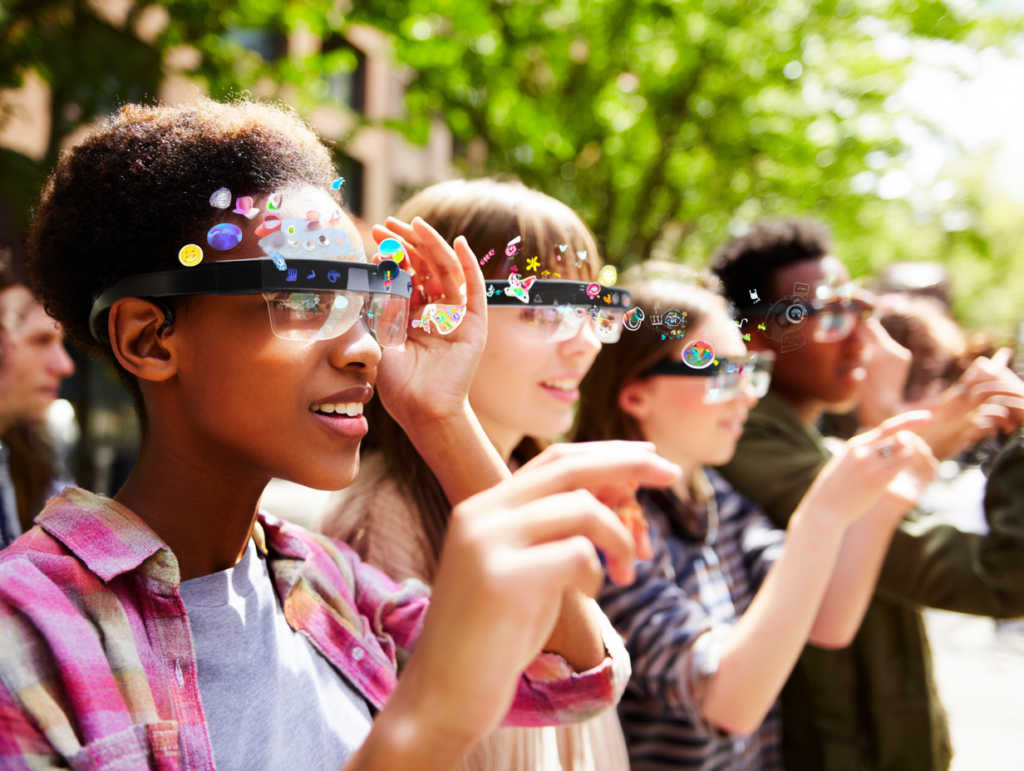
Like Meta, Snap brings with it a powerful advantage: a social layer already in place. Snap has focused on mobile-native AR — bite-sized, ambient, and lightweight.
While Snap’s Spectacles are still in an experimental phase, its lens-based ecosystem has already trained an entire generation to expect and engage with digital layers over the physical world. They already have a solid number of professional AR developers in place… developing and evolving AR experiences on a daily basis.
Snap might not win the race for high-end hardware, but it’s certainly the front runner in the race for the developers and the social media userbase.
Samsung: Quiet Power, Hardware First
Samsung is rarely the loudest voice in spatial tech, but it might be the most structurally important. As the world’s largest display manufacturer and a key supplier for nearly every major phone maker — including Apple — Samsung sits at the heart of the hardware supply chain.
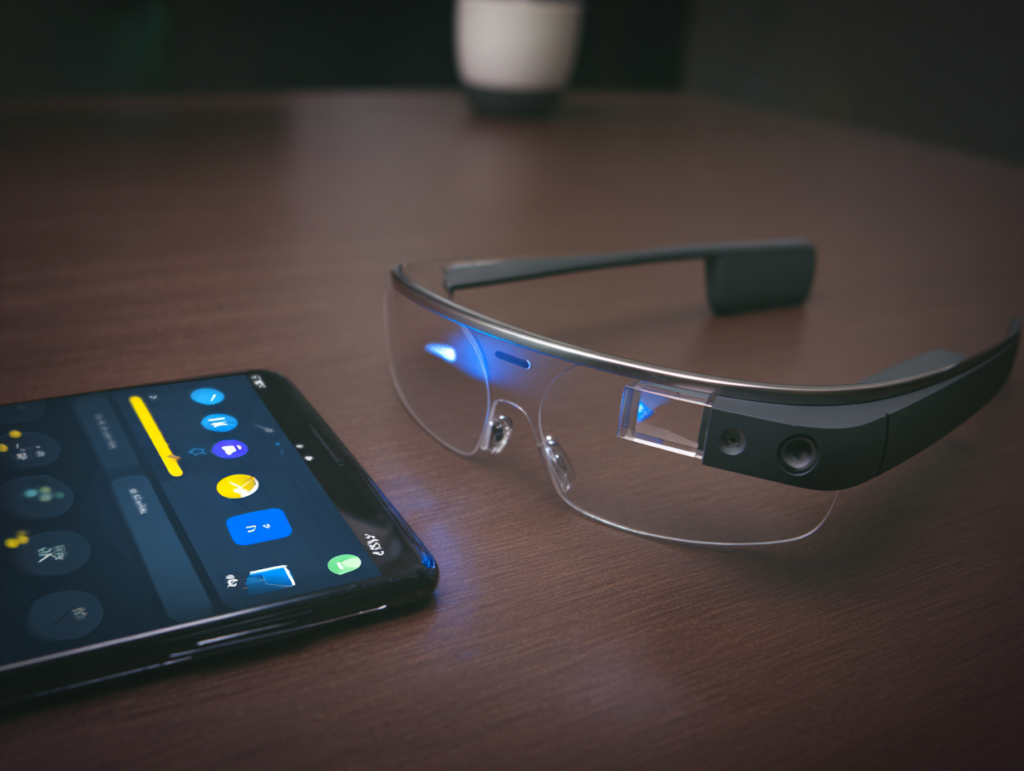
With Project Moohan, a partnership with Google, Samsung is taking a more measured approach: consumer-grade AR glasses designed to extend, not replace, your phone. They have taken a more functional approach: navigation, productivity, and media, in a form people will actually wear.
The bet? That spatial tech will succeed only when it feels like an extension, not a replacement, of what users already know. Think Android XR, not another walled garden.
🧭 The Real Race: Who Shapes Reality?
At its core, this is a battle for control of the interface that will shape our interaction with digital life for the next decades:
- The OS: visionOS vs. HorizonOS vs. Android XR
- The Ecosystem: Who builds the next Instagram — but spatial?
- The Norms: Gaze, gestures, or voice — who defines interaction?
- The Content: Will we scroll or move through digital stories?
Each contender brings different values. Apple promises polish. Meta bets on presence. Samsung focuses on scale. Snap understands play and social media.
Ultimately, only one or two will shape the standard everyone else must follow… as we saw with the smartphone.
The real question is: Who will we allow to sit between us and reality — and on what terms?