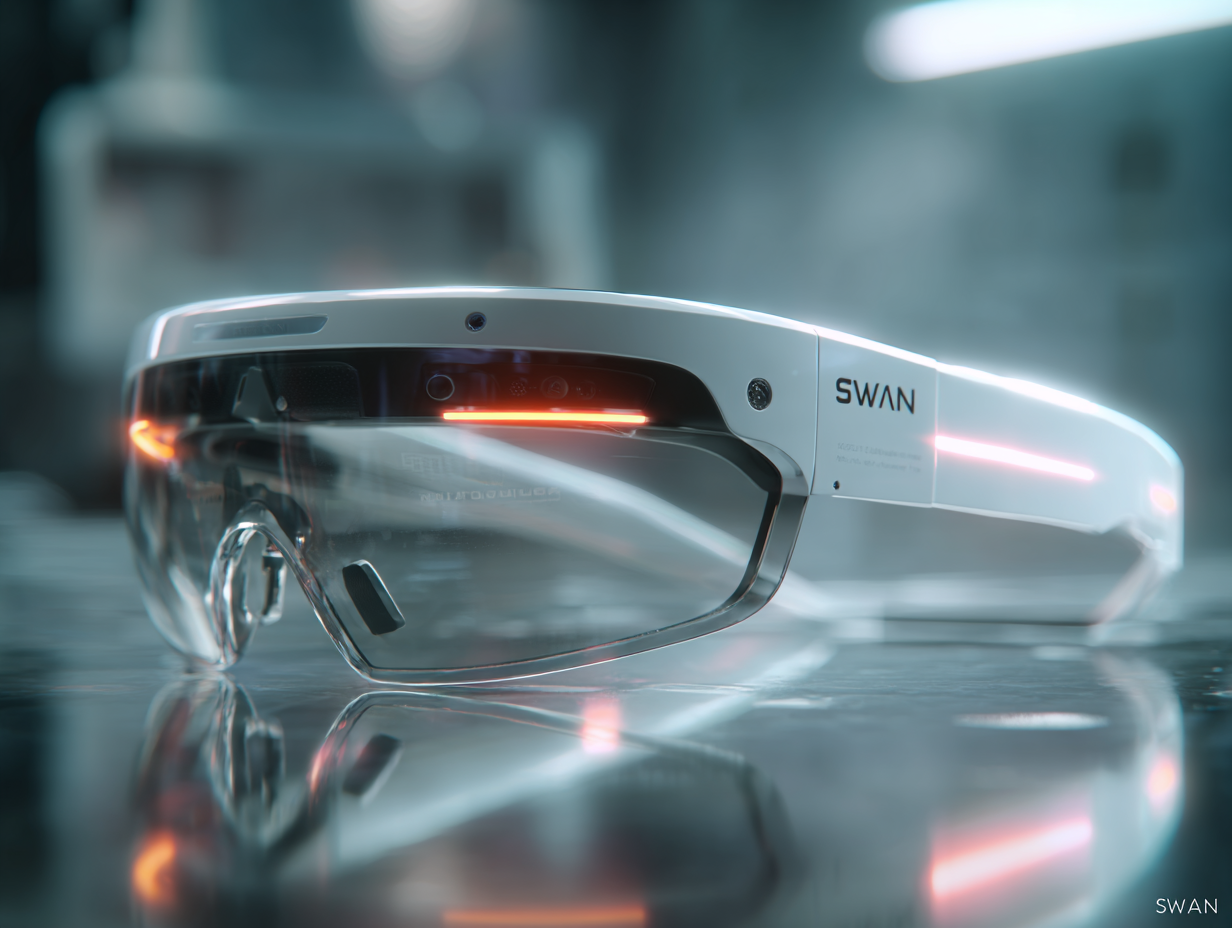
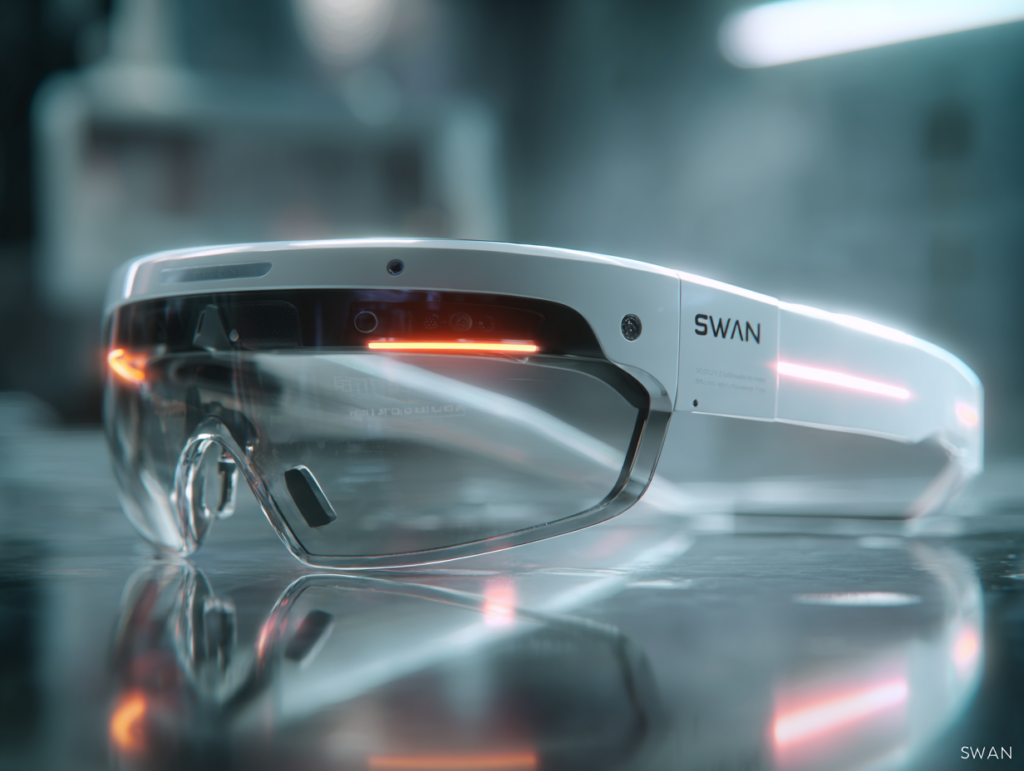
ByteDance, the parent company of TikTok, may be preparing to enter the XR hardware game in a serious way. According to reports, its VR subsidiary Pico is developing a new pair of mixed-reality glasses codenamed “Swan.”
The device is said to be a direct response to Meta’s Project Orion, and ByteDance appears to be taking a similar approach: instead of cramming all the processing power into the glasses, Swan could offload most of the heavy lifting to a small, external puck. That design choice keeps the glasses themselves lighter and more comfortable to wear for long stretches — one of the biggest complaints about existing XR headsets.
Why Swan Matters
ByteDance already owns a solid stake in the VR market through Pico, particularly in Asia and parts of Europe. But “Swan” feels different. It’s not just another VR headset — it’s a step toward the slim, everyday-wearable smart glasses that companies like Meta, Google, and Apple are all chasing. If the rumors are accurate, Swan could be ByteDance’s attempt to expand beyond social media and video apps into a much broader computing platform.
Challenges Ahead
Timing is tricky. ByteDance faces constant scrutiny in the United States over TikTok, and any attempt to launch XR hardware in North America would likely meet the same political headwinds. Even so, the company doesn’t necessarily need a U.S. release to make waves. Success in China, Southeast Asia, and Europe could give Swan the momentum it needs.

The Bigger Picture
The XR space is heating up fast. Meta continues to double down on Reality Labs, Apple has made its big entrance with the Vision Pro, and Google is quietly building out Android XR. Now, ByteDance is throwing its hat in the ring.
If Swan can deliver the right balance of design, comfort, and functionality, it could give consumers more choice — and push the industry toward devices that feel less like “headsets” and more like something you’d actually wear every day.

TikTok’s Effect House: Building the AR Ecosystem
While Pico works on the hardware side, TikTok has been steadily growing its Effect House platform — a set of creative tools that let developers design AR filters and effects directly for TikTok’s massive audience. Since launching in 2022, Effect House has attracted thousands of AR creators worldwide, who are using it to experiment with face tracking, hand tracking, and interactive 3D effects.
For ByteDance, this is more than just flashy filters. It’s a way to nurture an AR developer community that could eventually transition their creations from phones to headsets like Swan. By the time the glasses are ready for mainstream use, TikTok’s creator ecosystem may already be producing the kind of interactive content that makes XR devices worth owning. In other words, Effect House is the content pipeline for ByteDance’s future hardware.

A Glimpse at the Roadmap
Industry insiders suggest that Swan is part of a longer-term XR roadmap for ByteDance. Pico has been steadily iterating on its VR line, with the Pico 4 arriving in late 2022 as a competitor to Meta Quest 2. Swan appears to be the next leap: moving from bulky headsets into lightweight, mixed-reality wearables. If development stays on track, analysts expect early prototypes to appear in 2025–2026, with a commercial launch potentially lined up for the second half of the decade. This staged approach mirrors what we’ve seen from Apple and Meta — starting with headsets, then transitioning to more socially acceptable smart glasses.
ByteDance’s XR journey has been evolving quickly:
- 2021 → ByteDance acquires Pico, establishing its foothold in the VR market.
- 2022 → Launch of Pico 4, aimed at competing directly with the Meta Quest 2.
- 2024–2025 → Reports surface of “Swan,” a lightweight MR glasses project.
- 2025–2026 (expected) → Early prototypes could be revealed, either at industry expos or via limited developer releases.
- Late 2020s → A full commercial launch of Swan, possibly followed by consumer-friendly smart glasses that integrate ByteDance’s content platforms (TikTok, CapCut).
This step-by-step roadmap mirrors the strategies of Meta and Apple: start with VR headsets, then transition into smaller, lighter, socially acceptable glasses that can eventually be worn daily.
Takeaway
ByteDance’s Swan project signals a bold expansion beyond social media and short-form video, positioning the company as a serious contender in the XR and mixed-reality space. By focusing on lightweight, wearable design and pairing it with TikTok’s Effect House ecosystem, ByteDance is cultivating a content pipeline that could make XR devices compelling for everyday use.
While geopolitical challenges and fierce competition from Meta, Apple, and Google remain, the company’s measured roadmap demonstrates a clear strategy: iterate on VR, develop a thriving AR creator community, and gradually introduce socially acceptable, stylish smart glasses. If successful, Swan could redefine how consumers engage with XR technology and influence the future of wearable computing.